Professional work · AI · Web app / SaaS · Design systems · Web design
Grant Assistant — design systems and AI-native product design
Leading product design for an AI-powered grant-management platform: building the design system from the ground up and shaping core AI-assisted workflows through the product's acquisition by FreeWill.
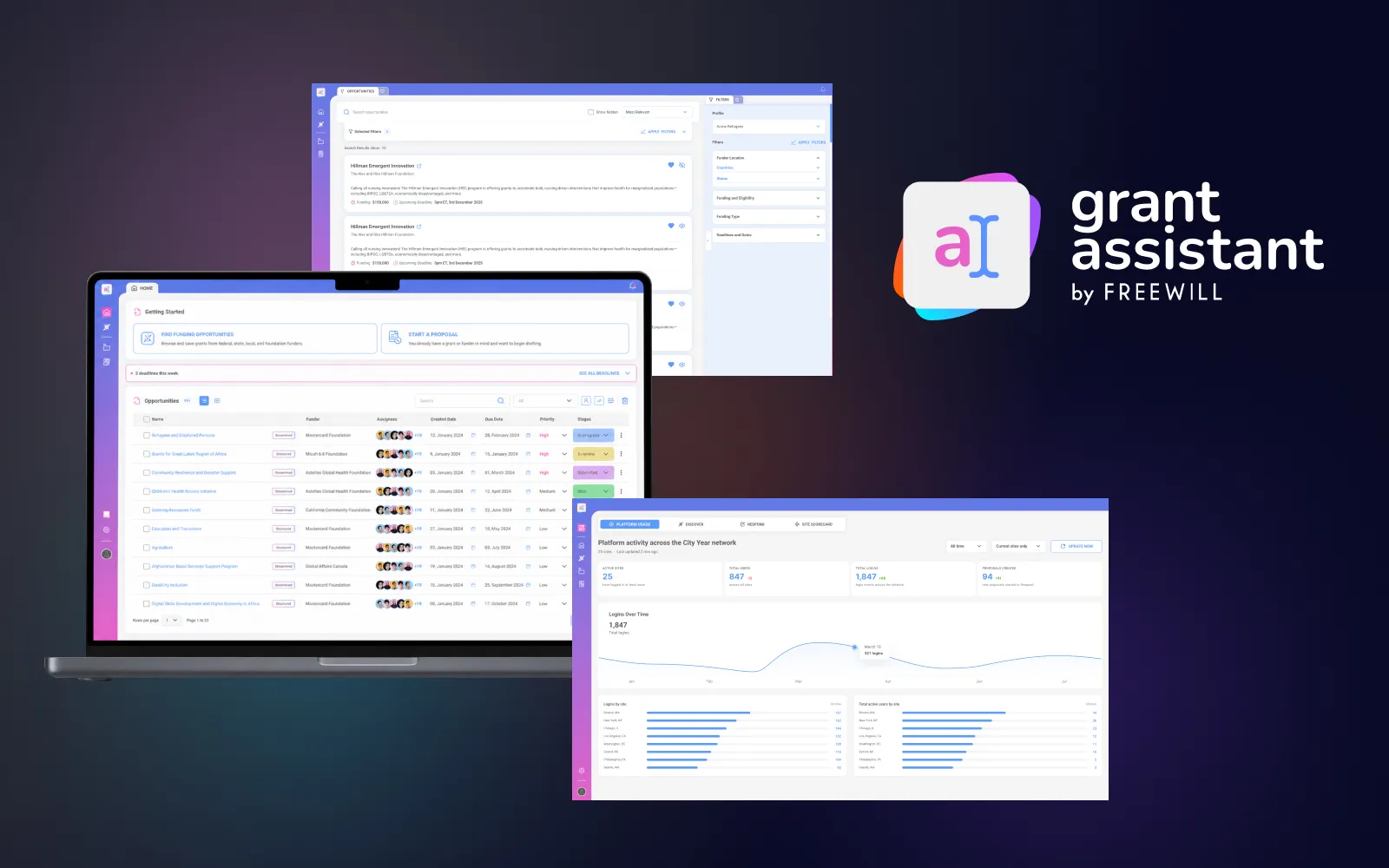
I led product design for Grant Assistant, an AI-powered grant-management platform used by nonprofits, INGOs, and international development organizations — owning workflows end-to-end, from problem definition and user flows through prototyping, developer handoff, and continuous improvement. Over my time there, I built the company’s design system from the ground up and helped shape its core AI-assisted workflows through the product’s acquisition by FreeWill.
At a glance
- 50+ reusable components in a design system built and maintained in Figma
- 10+ designers and engineers supported by that system day to day
- Owned end-to-end UX for grant discovery, proposal drafting, collaboration, and compliance — Grant Assistant’s core AI-assisted workflows
- Design partner through the company’s acquisition by FreeWill, October 2024
The context
Grant Assistant helps mission-driven teams find funding and draft stronger proposals faster, using AI to match organizations with relevant opportunities and turn program details into a proposal written in their own voice.
When I joined, there was no design system in place — just a single flow with no consistent, reusable components, and developers pulling designs and components from whichever UI library seemed to fit a given case. The result was a heavy, fragmented codebase spanning multiple disconnected libraries, which meant development took far longer than it should have.
My role: As Lead Product Designer, I owned product design end-to-end; problem definition, user flows, prototyping, developer handoff, and implementation review, across a team of multiple designers and developers. I worked directly with product managers, engineers, and executives to turn compliance-heavy, ambiguous requirements into shippable experiences.
Building the design system
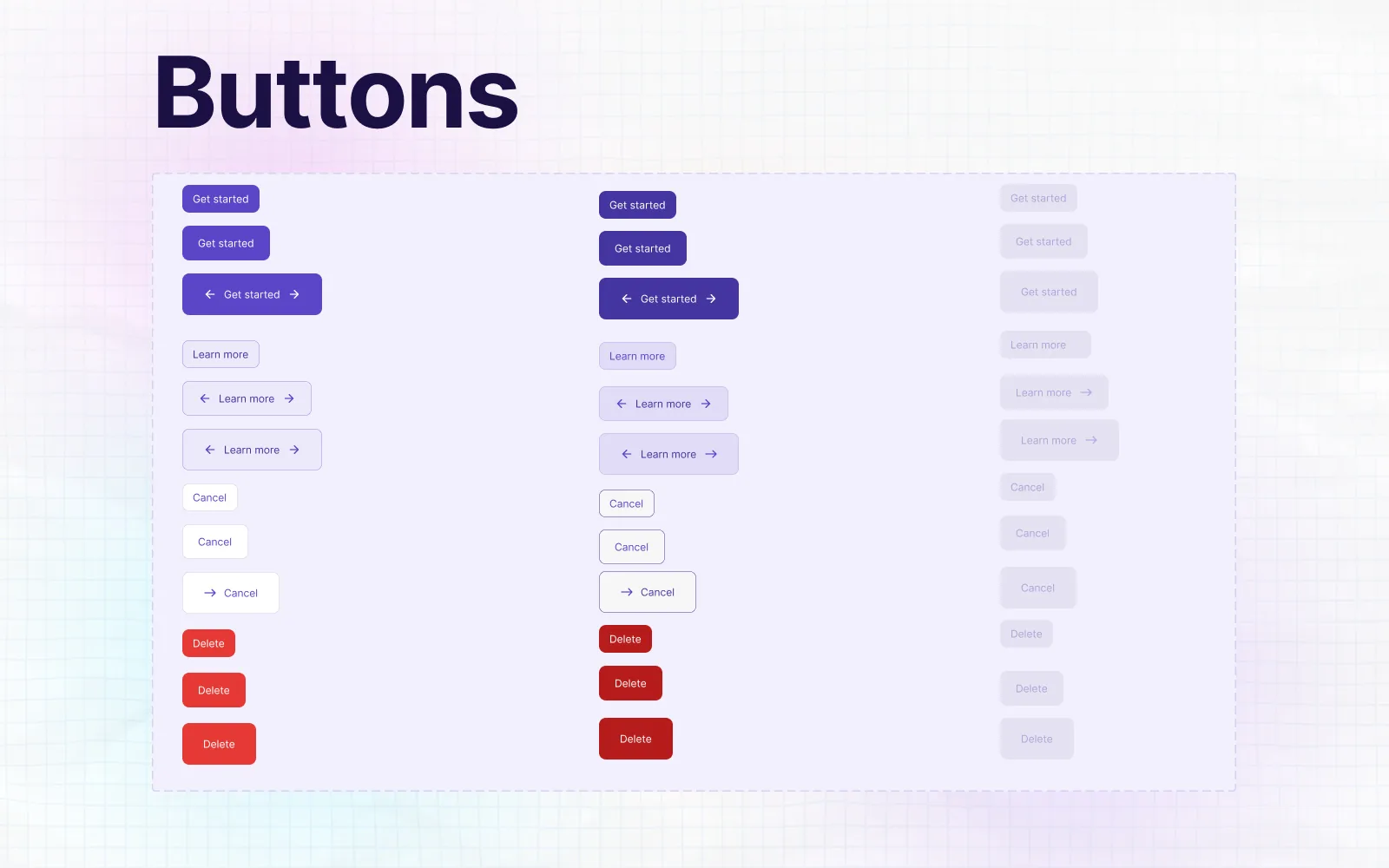
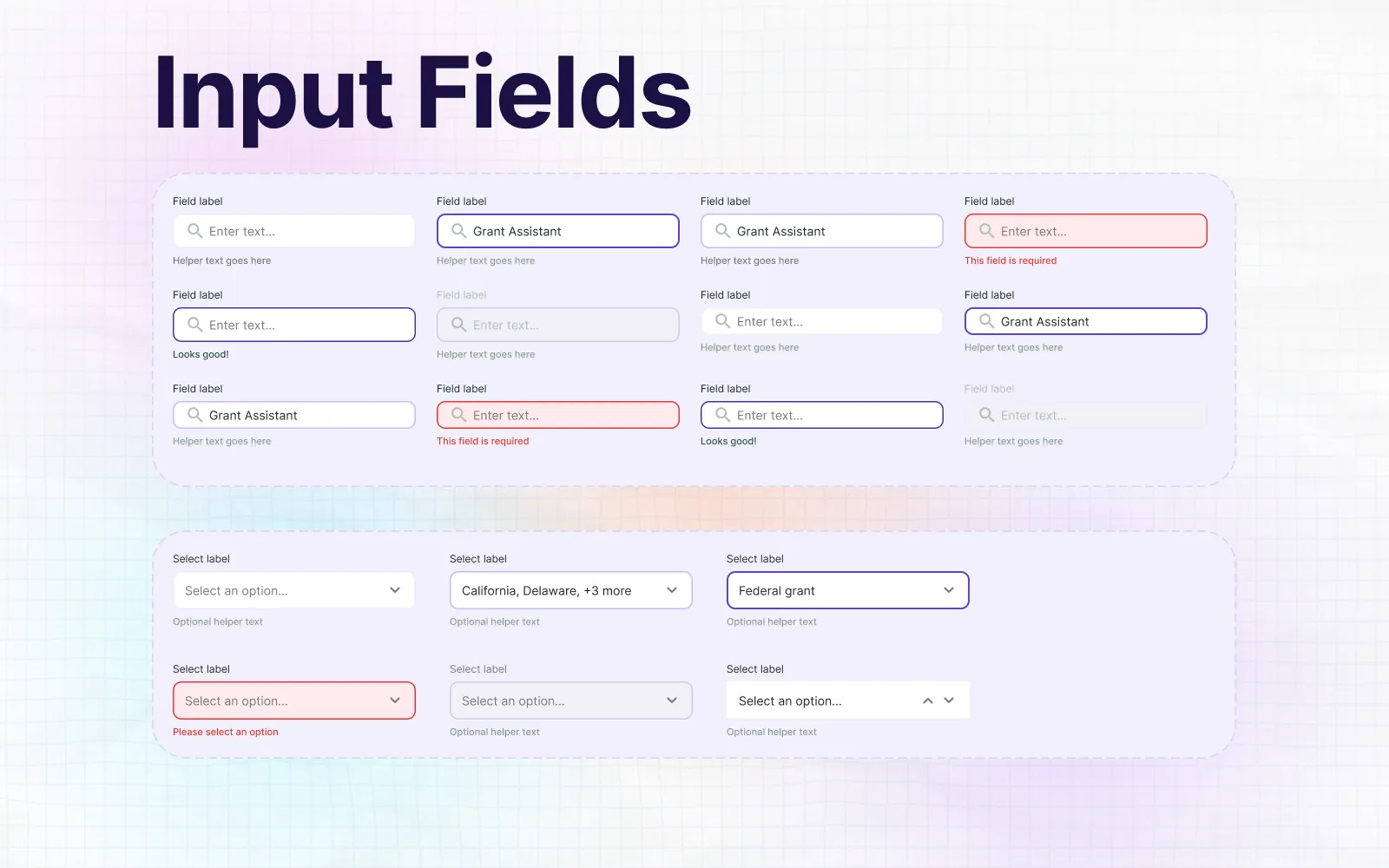
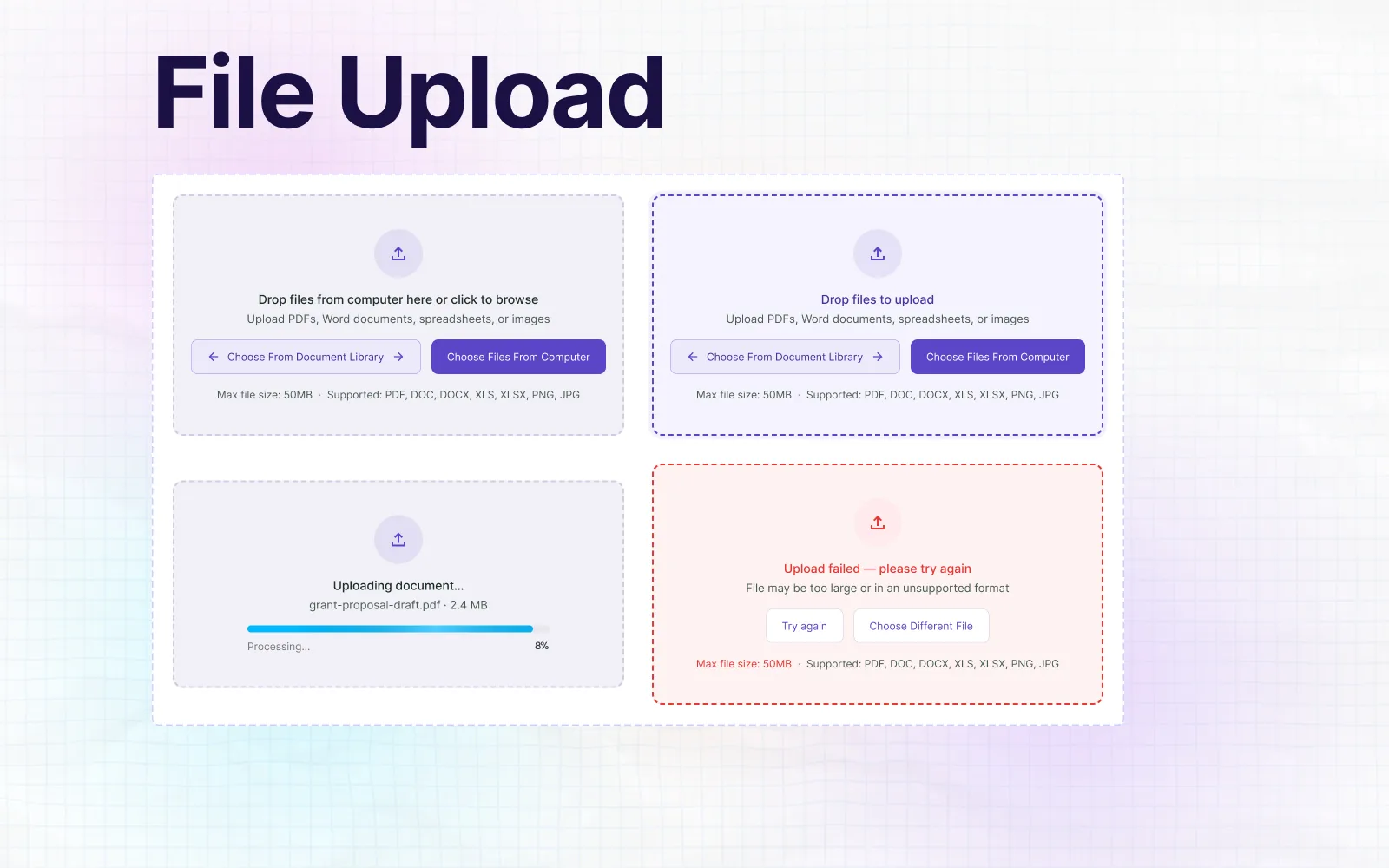
I established and evolved Grant Assistant’s design system: components, interaction patterns, layout standards, typography, color, spacing, states, and design tokens — built and documented in Figma.
- Built and maintained 50+ reusable components, supporting designers and engineers
- Partnered with engineering to align Figma components with the production front-end library, tightening design-to-dev handoff
- Audited existing screens across core workflows, identified inconsistencies, and standardized patterns
Outcome: The design was streamlined considerably. Engineers built their own component library off the system, which drove significant component reuse across the product, cut development time, and gave the platform a unified look for the first time.
Designing the AI-assisted proposal workflow
Grant Assistant’s core bet is that AI can do work a grant writer used to do by hand. Surfacing the right opportunities and turning program details into a proposal that still sounds like the organization wrote it. Designing that well meant solving for real stakes; an org’s funding, sometimes its ability to operate at all, could ride on a proposal.
-
Shortening the proposal flow: Reduced the proposal creation process from 12–14 steps to 8, cutting the core journey by roughly 30%.
-
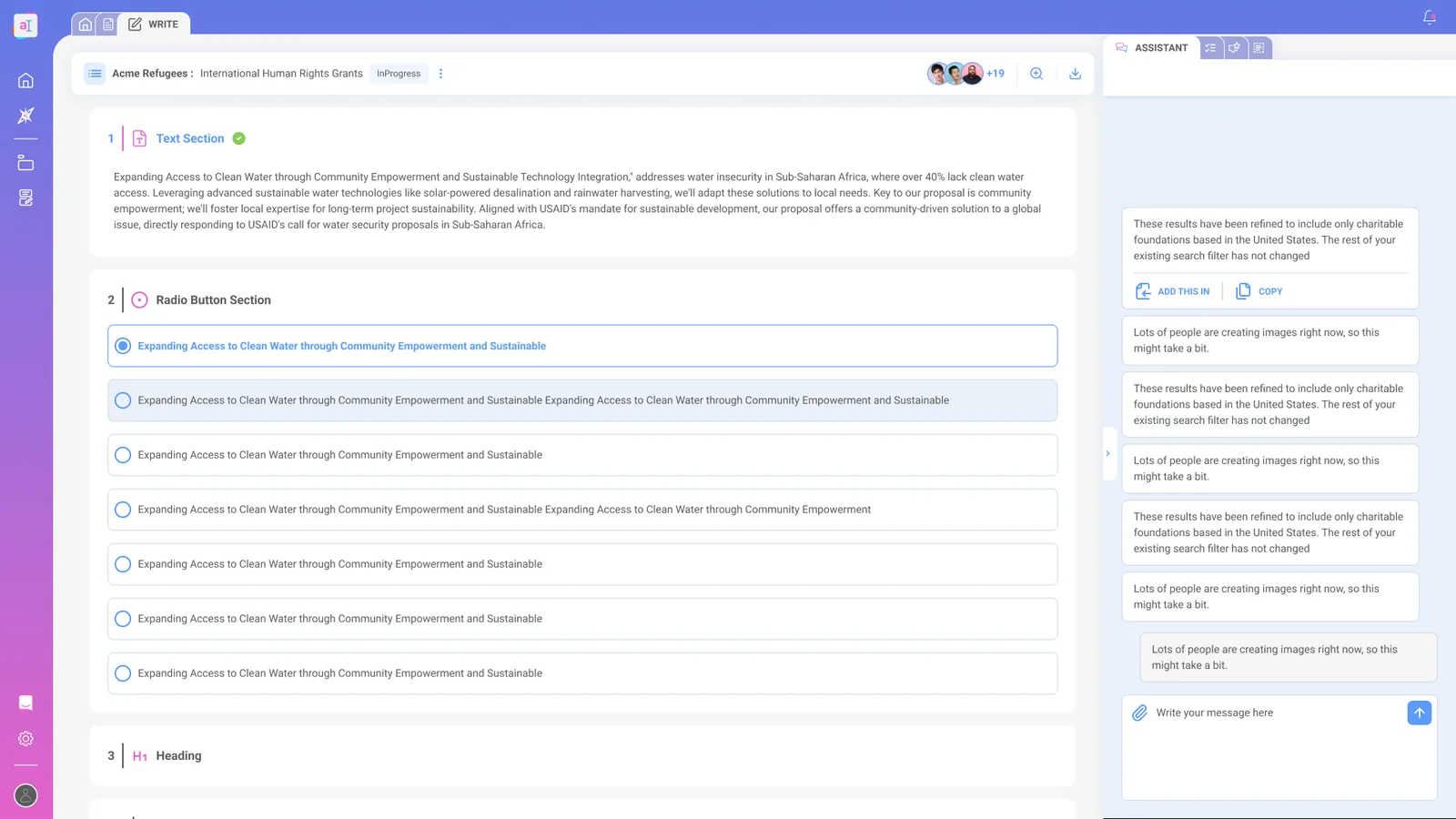
Simplifying the text editor: Designed a familiar, easy-to-navigate editor for experienced grant writers, particularly keeping in mind our user personas typically aged 45 and above.
-
Improving onboarding: Created an internal interface where customer-success teams could pre-fill organisation details collected during sales.
-
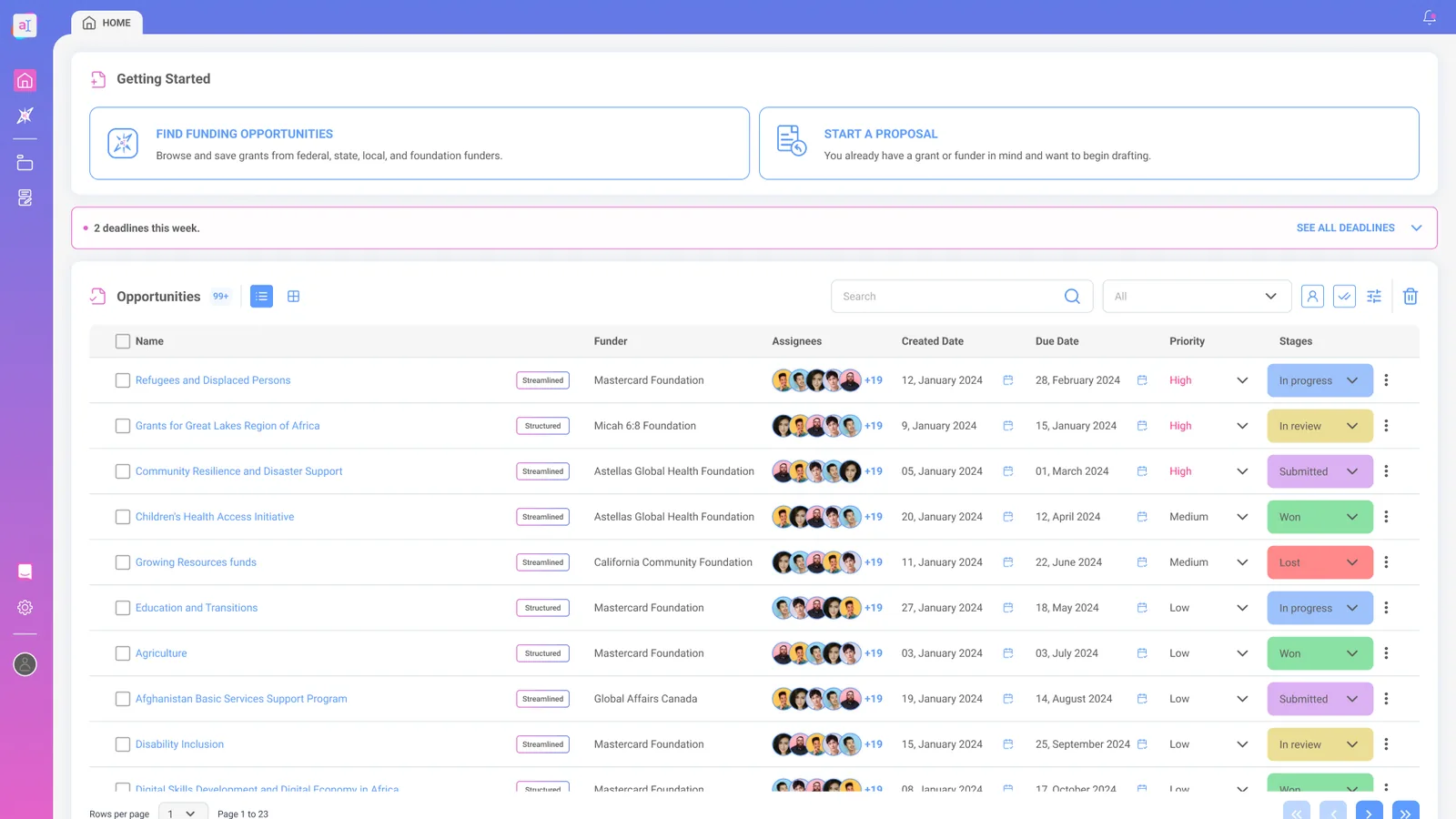
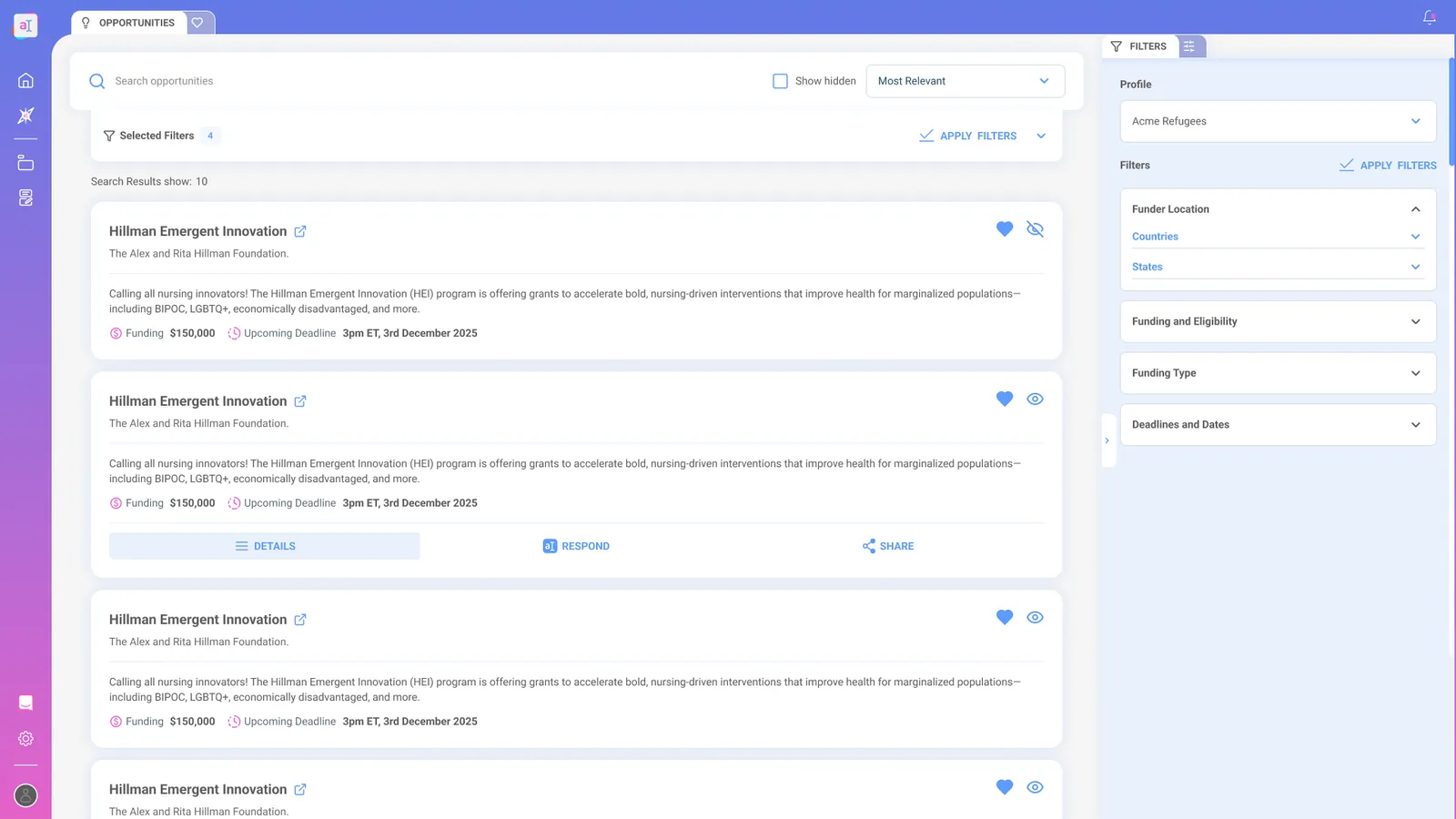
Restructuring opportunities and cycles: Replaced separate opportunity records for each funding cycle with one central opportunity containing all related stages and cycles.
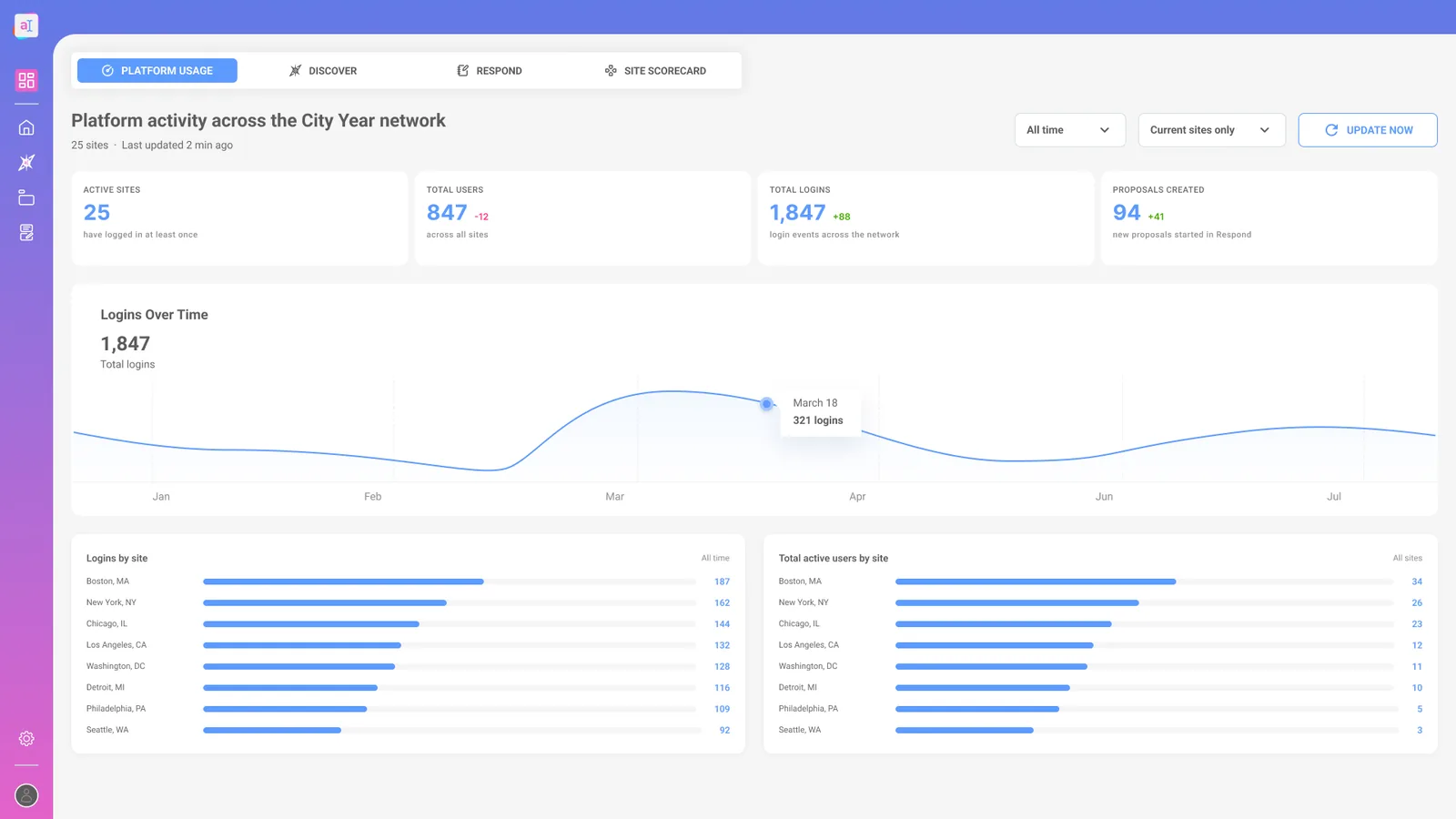
Outcome: I simplified the core experience by shortening the proposal flow, introducing a more familiar editor, streamlining onboarding with pre-filled organisation details, and restructuring opportunities, stages, and cycles into one clearer system. Together, these changes reduced friction, improved usability, and made the platform easier to navigate and manage.
Cross-functional leadership
Design didn’t happen in isolation. I ran design reviews and implementation checks to keep the product usable, consistent, and high quality as it shipped, and partnered closely with product managers, engineers, and executives to define requirements and guide features from discovery through release on a product where compliance and funder trust left little room for error.
Impact
- A design system with 50+ components, supporting 10+ designers and engineers, documented well enough to run without tribal knowledge
- The redesigned workflow helped users start proposals 30% faster, work in a familiar editor, avoid repetitive data entry, and follow opportunities more clearly throughout their lifecycle.
- Design partner through a product strong enough to be acquired by FreeWill in October 2024
- Reduced design to development overhead
Overall, these changes created a faster and more user-friendly product experience from sign-up to first draft. Proposal creation and onboarding became around 30% faster, while the familiar editor layout helped users write, refine, and finalize proposals with less effort—even under tight deadlines. The design system also accelerated delivery, making design and development handoffs 40–50% faster, reducing clarification discussions by about 50%, and improving component reuse across the product. Together, these improvements shortened turnaround time, reduced friction, and made both the user journey and internal development process significantly more efficient.